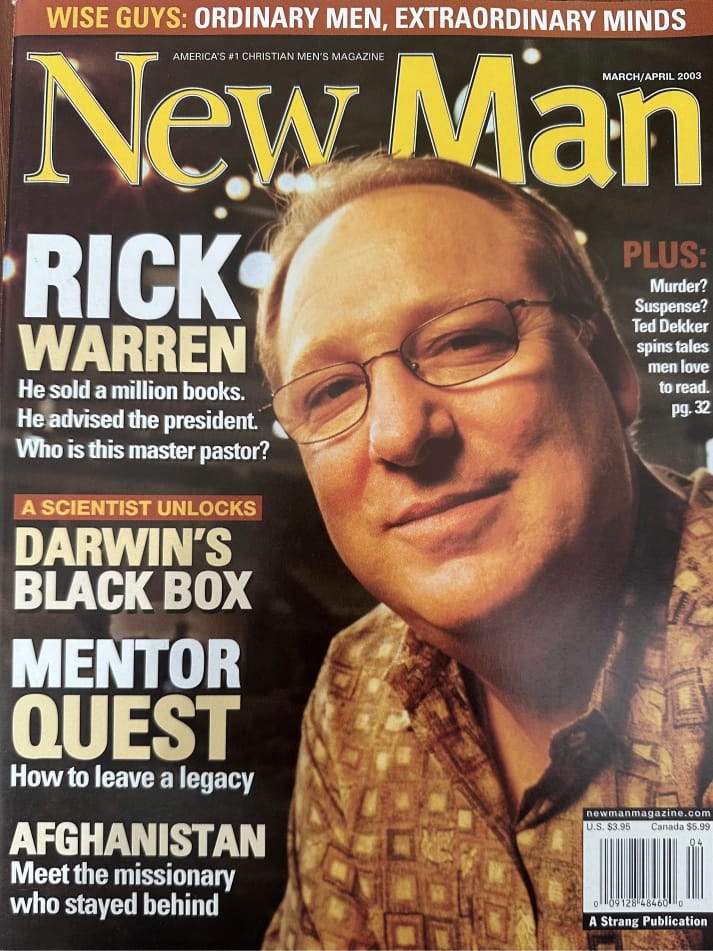
Courtesy of New Man Magazine (Strang Communication)
March/April 2003
Mentor Quest: How to Leave a Legacy
Nigerian authors Olu and Kay Taiwo are challenging feminism, encouraging men to find and become mentors.
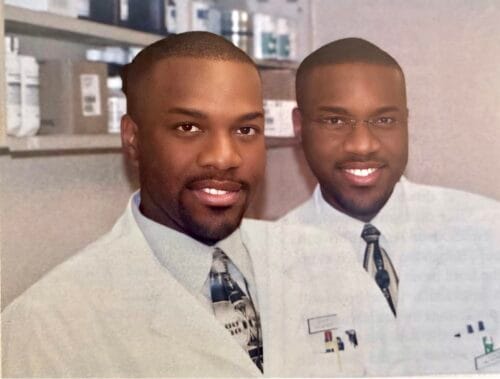
Olumide Taiwo is man enough to admit that he watches The Oprah Winfrey Show. Right now, the episode in question is the one that featured young Ryan Hreljac, the 9-year-old who was once deemed “too sensitive” by a grade school teacher then went on to raise more than $210,000 to build 50 clean water wells in Uganda. His legacy of compassion was immortalized as the people named one of those structures Ryan’s Well.
“If Ryan can start his legacy before junior high school, then at age 30, I think we qualify,” Olumide says. “When people think of a legacy, they think of someone in a wheelchair looking back over their life. But look at the sports arena and see a guy like Tiger Woods whose legacy is now.”
Olumide and his twin brother, Kayode, better known as Olu and Kay, are on a fast track toward establishing their own legacies. Last year, the pair co-authored their second book The Progenitor Principle: Why You Must Leave a Legacy Behind (WinePress Publishing). The book is aimed squarely at the family and the church as a reminder of the importance of mentoring.
The concept of the “progenitor” (or forefather) and its role in mentoring is something the Taiwo brothers learned from an early age. They were born to Nigerian parents while their father, Moses, was attending Long Island University in New York. When the brothers were six, their family uprooted from New York and relocated to their parents’ homeland, Nigeria.
In a relatively short period of time, the family was assimilated back into its indigenous culture. There were the occasional blackouts and the two-mile walks to and from school in the blazing sun (the Taiwo family lived directly on the equator), but Kay and Olu say those challenges made them appreciate their lives in the United States even more. More importantly, they discovered a sense of community that set the course of their lives and their ministry.
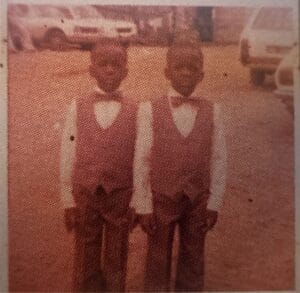
“You hear that old African proverb: ‘It takes a village to raise a child.’ That was our experience,” Olu says. “Everybody is interconnected.”
The brothers say this “collectivist” way of life is common in Africa, Asia and Central and South America, and that this community-based ideal transcends into every walk of life, from family to business to government to church.
In a collectivist culture, people come to visit you spontaneously to check up on you. “It’s no offense that they didn’t give you any prior warning,” Olu explains. “You cater to them as if you had expected them all along.”
People also aren’t as hung up on time in a collectivist society. “People are not so much in a rush,” Kay says. “If you need attention, they give you the attention you require.”
This attitude also affects the way the church deals with people. It’s common for people to ask such confrontational questions as, “Did you read your Bible today?” or, “How is your spiritual life?”
Says Olu: “The pastor sees himself as a father to his church. The mind-set of mentoring is that you need to impart into people’s lives. There’s a sense of responsibility with that role.”
Having been immersed in a collectivist society for the better part of their lives, the twins experienced culture shock when they returned to New York to study pharmacy at St. John’s University. (It was an appropriate field of study as they had brought a bad case of malaria with them.)
Kay and Olu also spent a large part of those five years involved in the mentoring process as part of a youth ministry in Queens.
“When I came back here, it was interesting. The young people looked so distracted,” Kay remembers.
“Early on, I couldn’t put a word to it, but over time, I started to understand the cultural differences. I found that the predominant philosophy that governs the American culture is the individualistic outlook. America’s history was more community-based but over time has become more individualistic.”
This individualistic ideology has eroded the American family, the brothers say. Upon their arrival back in the United States, they were shocked to see such a high divorce rate as opposed to Nigeria, where it is virtually nonexistent.
“In situations where children don’t have fathers in their lives, their mentors first have to take time to pull them out of the ditch,” Kay says.
“That’s why you have so many people, especially young men, with low self-esteem and an identity crisis. That’s also why so many men in America don’t want to be mentors. It takes so much time and can be draining.”
The twins also found a stark contrast between the role of husbands in America and in Nigeria, where fathers are the undisputed heads of most families. They say that the feminist movement has both helped and hurt women.
“Men are afraid to assert themselves, afraid to be men,” Kay said.
When wives challenge the authority of their husbands, men withdraw and find their purpose outside the family, leaving a void in the lives of children.
“Women don’t like the monster they’ve created,” Olu said.
At the same time, husbands who demand submission create resentment. Olu explained that Christ leads through love, not force.
While the problem of mentoring is real, the Taiwo brothers focus on solutions.
“We come from a very positive perspective,” Kay says.
How to Find a Mentor
First, recognize where you need help—spiritual, financial, or relational. Then seek people of integrity who are succeeding in those areas.
Mentors can be found in schools, workplaces, churches, books, or media.
“You will need several mentors who have expertise in specific areas,” Kay says.
How to Become a Mentor
Take inventory of your experiences and be willing to invest in others.
“Be accessible. Be approachable,” Olu says.
Share your knowledge creatively—through writing, teaching, or media.
Currently, the brothers are developing Vision, Identity and Image-Building Seminars while working as pharmacists in Tulsa, Oklahoma.
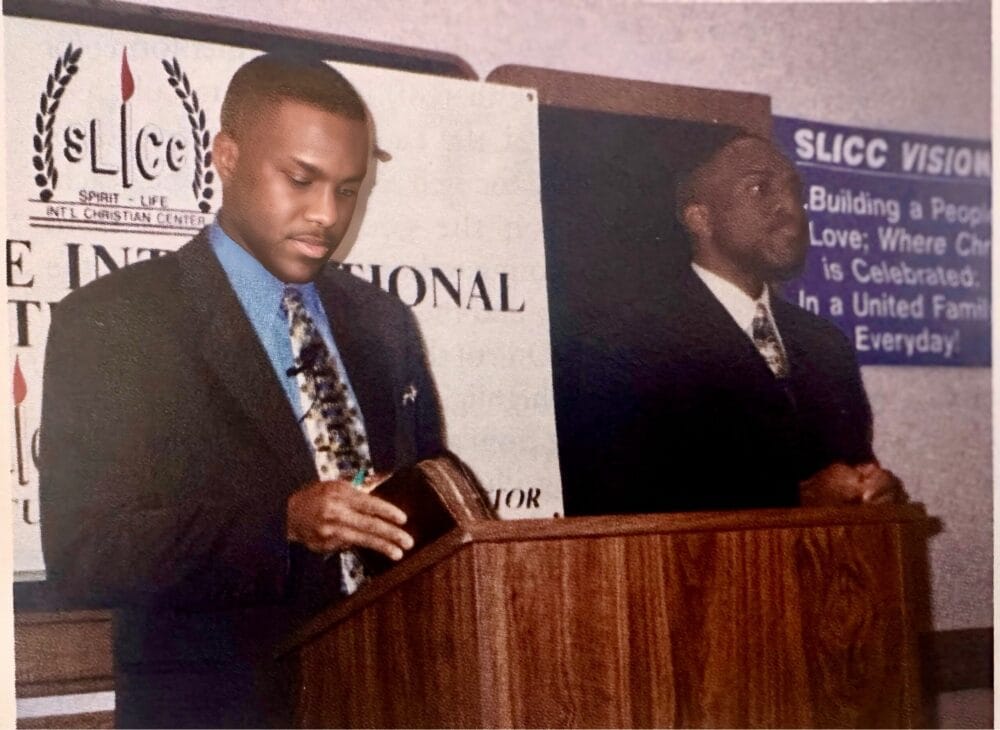
“We’re going to take what God has shown us and start passing it on,” Kay says.
They emphasize that mentoring is not limited to fathers.
“I don’t need to be married or be a father to do those things,” Kay says.
Legacy That Multiplies
Their goal is to inspire others to fulfill their destinies in Christ.
“A true leader seeks successors who outperform him,” Olu says.
Vision Statement: “Raising men and women of foresight and impacting generations.”
Chad Bonham is a freelance writer and author.
Contact:
Vision For Life Ministries
P.O. Box 3553
Broken Arrow, OK 74013
Email: contact@vflm.org
Website: http://www.vflm.org